
Project Description
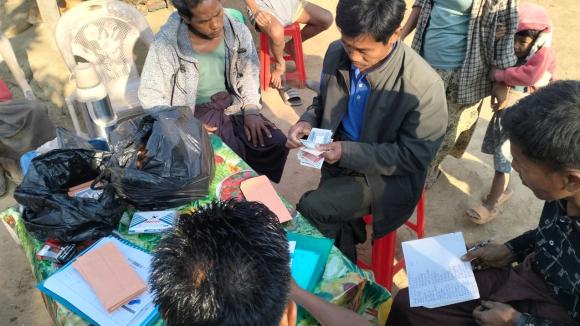
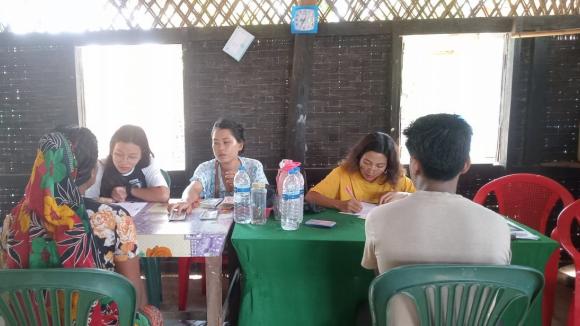
- The Locally Led Humanitarian Rapid Response and Resilience Program in Rakhine State is a crucial initiative funded by the FCDO through the Local Assistance Myanmar Programme (LAMP), with fund management by UNOPS.
- Led by PDI-Kintha, the project is implemented by three local organizations to deliver humanitarian assistance and build community resilience through locally driven coordination and action.
- The initiative provides Multi-Purpose Cash Assistance (MPCA) to approximately 7,600 households in part III, integrated with Mine Risk Awareness during distribution. Additionally, 1,050 households receive essential Disaster and Conflict Preparedness support. We strategically target Internally Displaced Persons (IDPs), host communities and minority ethnic groups across seven townships in northern and central Rakhine.
Project Objectives
- Provide Multi-Purpose Cash Assistance (MPCA) to vulnerable households, integrated with Mine Risk Awareness (MRA) during distribution, to address immediate survival needs.
- Strengthen the capacity of partner Civil Society Organizations (CSOs) through training (e.g., PSEA, Mine Risk Education) and conduct regular coordination meetings to harmonize humanitarian actions.
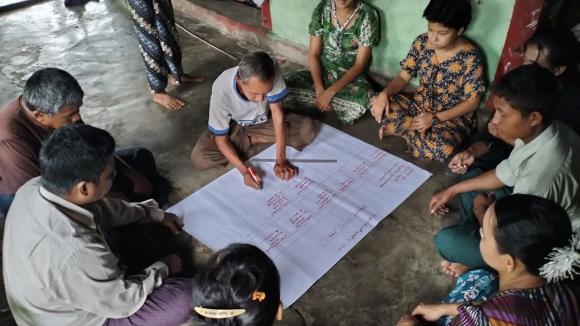
- Build local capacity for Disaster Risk Reduction (DRR) and Conflict Preparedness (DCP) by forming Village Disaster Management Committees (VDMCs) and providing essential training and DRR kits.
Key Achievements
- Multi-Purpose Cash Assistance (MPCA) was successfully provided to 51,983 beneficiaries in 12,603 households from parts I to III. This assistance was delivered to 190 villages across 143 village tracts in six townships in Central and Northern Rakhine.
- A four-day in-person township-level training on EEPR and Mine Risk Education was successfully conducted, engagingng 17 participants from nine organizations.
- The project successfully maintained high levels of coordination and information sharing. 52 township and stakeholder-level meetings were held.